

What a Rock Hill oven is fitted into
Electric predominantly, with a 240-volt range circuit and the laundry position varying by build era in the same way it does across the North Carolina side. What differs is not the hardware but the paperwork: an installation question that would be referred to a North Carolina board at a Charlotte address is referred locally here, and a contractor who is licensed in North Carolina is not automatically licensed in South Carolina for the regulated parts of the work.
The reason that matters is that ovens are where the repair-or-replace arithmetic most often misleads people, and the misleading part is the installation rather than the appliance.
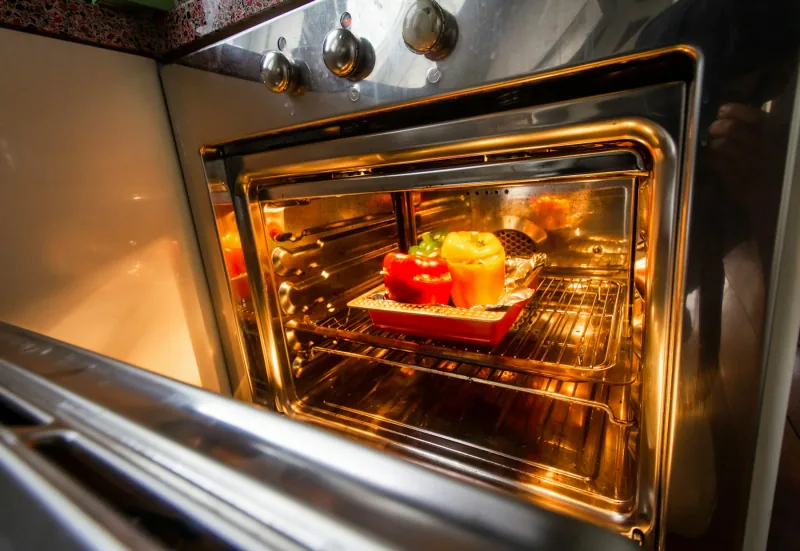
The rule people apply is the fifty percent rule: do not spend more than half the cost of a comparable new appliance on repairing the old one. It was written about a machine you can wheel out of a shop. A wall oven is cut into a cabinet. The aperture has a width, a height and a depth, the trim overlaps the surrounding joinery, and the appliance is usually hard-wired rather than plugged. Replacing one means finding a current model that fits an opening built around a unit from ten or twenty years ago, and where it does not fit you are into a joiner altering a fitted kitchen. So a $400 repair on a wall oven in Rock Hill is not competing with a $700 appliance, it is competing with an appliance plus an electrician plus quite possibly a joiner. We measure the aperture and check the connection before recommending either way.
The other thing worth publishing, because it costs us work to say it: the self-clean cycle is the leading cause of the dead ovens we attend. Pyrolytic cleaning takes the cavity to 800 or 900F for two to four hours, far beyond anything cooking requires, and three things fail as a result. The thermal fuse, which is a one-shot device fitted precisely so it goes before something costlier does. The control board, which lives immediately above the cavity where the heat rises. And the door lock motor, which leaves the oven dead and locked shut.
So the advice is simple. Do not run self-clean the week you need the oven, and preferably do not run it at all. Clean the cavity cold, by hand. It is tedious and it blows nothing.
The commercial position is the same in Rock Hill as it is at a Charlotte address, because the rate card on this site is not a Charlotte rate card. The diagnostic visit is $89 and it comes off the invoice in full when you approve the repair. Labour beyond that is $95 to $145 an hour. Nothing is added for the drive, and if the same fault returns after we have fixed it the return visit carries no fee at all.
What Rock Hill itself changes
The kitchens in Rock Hill
York County has a median year of construction of 1993, and Rock Hill is the town that sits closest to that median rather than at either end of it. What a 1993 kitchen means in practice is a specific replacement history: the original dishwasher and range have been through one cycle, the refrigerator has generally been through two, and the appliances currently in the room were bought at different points across the last fifteen years. So a Rock Hill kitchen is a mixed-age kitchen, and the useful thing to establish on the phone is the age of the individual appliance rather than the age of the house, because the two have almost nothing to do with each other here.
The water and the power
Rock Hill is on its own municipal water supply rather than Charlotte Water, so none of the hardness figures this site quotes for Charlotte apply at a South Carolina address and we check the local report before applying the soft-water reasoning to a dishwasher or an ice maker. Duke Energy serves the area for power. The one requirement that does not change at the state line is the federal one: EPA Section 608 certification governs sealed-system refrigeration work identically in both states, because it is a Clean Air Act requirement rather than a state one.
Permits and who is licensed
Swapping an appliance on an existing connection needs no permit here any more than it does over the state line, and we will say so rather than inventing a fee. What changes in South Carolina is who reviews the regulated parts. New or altered wiring for a hard-wired appliance and any work on a gas supply line are licensed trades reviewed locally rather than by a North Carolina office. The one requirement that does not change at the state line is the federal one: EPA Section 608 certification governs sealed-system refrigeration work in both states equally. In Rock Hill the City reviews work inside city limits and York County covers addresses outside them, and we confirm which applies before anything that touches a circuit or a gas connection.