
Who may legally work on a Huntersville range
Swapping an appliance on an existing connection does not require a permit anywhere in this service area, and we will tell you that rather than adding a line for one nobody filed. What is regulated is the connection itself: new or altered wiring for a hard-wired appliance falls under the North Carolina electrical board, and anything on a gas supply line falls under the plumbing and heating board. Neither is appliance work and we hand both to the licensed trade. Huntersville is reviewed by Mecklenburg County through its combined process rather than by a separate town office, which makes the answer the same here as at a Charlotte address.
That is worth knowing before anyone opens the back of a range, because a range sits across two trades. The appliance is ours. The connection behind it is not: gas supply work and new or altered wiring are separately licensed trades in North Carolina, with their own boards. We reconnect an appliance as part of servicing it, and anything beyond that goes to a licensed trade, said on the phone where we can see it coming rather than on the day.
Where that lands practically in Huntersville is the electrical side, because the great majority of homes across this metro run electric (75% of North Carolina homes on EIA figures, and the Carolina Piedmont either side of the line behaves the same way) and most ranges here are 240 volts. That supply arrives as two separate 120-volt legs and the appliance divides its load between them, so losing one produces a very particular pattern: the clock is fine, two burners work, the oven does nothing at all.
From the front that reads as a failed control board and it is quoted as one constantly. There are only three places a leg goes missing, and two of them are free to check. The double-pole breaker, where one half can trip while the other holds. The terminal block at the back of the range, where the cord lands on screwed terminals carrying the whole load of the appliance through a mechanical connection that loosens, heats, chars and eventually goes open. And the cord or receptacle itself.
A terminal block costs tens of dollars. A range control board costs several hundred and comes with a lead time. We check the block before anything else is discussed and we photograph it, because a charred block is evidence rather than an opinion. Where the receptacle or the house wiring is the part that has cooked, that is licensed electrical work and it goes to a licensed trade.
The commercial position is the same in Huntersville as it is at a Charlotte address, because the rate card on this site is not a Charlotte rate card. The diagnostic visit is $89 and it comes off the invoice in full when you approve the repair. Labour beyond that is $95 to $145 an hour. Nothing is added for the drive, and if the same fault returns after we have fixed it the return visit carries no fee at all.
What Huntersville itself changes
The kitchens in Huntersville
Huntersville carries the newest housing stock of any town in Mecklenburg County, with 31.9% of it built since 2010 and a median year of 2004, and a genuine pre-1940 layer around the old mill town centre. That gap is the whole story here. In the post-2010 half we are dealing with the current generation of appliance: inverter drives, communicating control boards, induction hobs and app connectivity, where the diagnosis is electronic and the good news is that the parts are all still in production. In the old centre we are dealing with kitchens that have absorbed a century of change, and the fault is as likely to be the installation as the appliance.
The water and the power
Charlotte Water, so the figures this site quotes apply directly here: 32 parts per million hardness and 59 parts per million total dissolved solids. That means the etched-glassware argument on the dishwasher page is not a general claim in Huntersville, it is a local one, and halving the detergent dose is a genuine first answer to cloudy glass at a Huntersville address. Duke for power. Given how much of the town is post-2010, the appliances here are also the ones most likely to be reporting their own fault codes, which is useful when it is read properly and misleading when a code is treated as a diagnosis.
What is actually installed
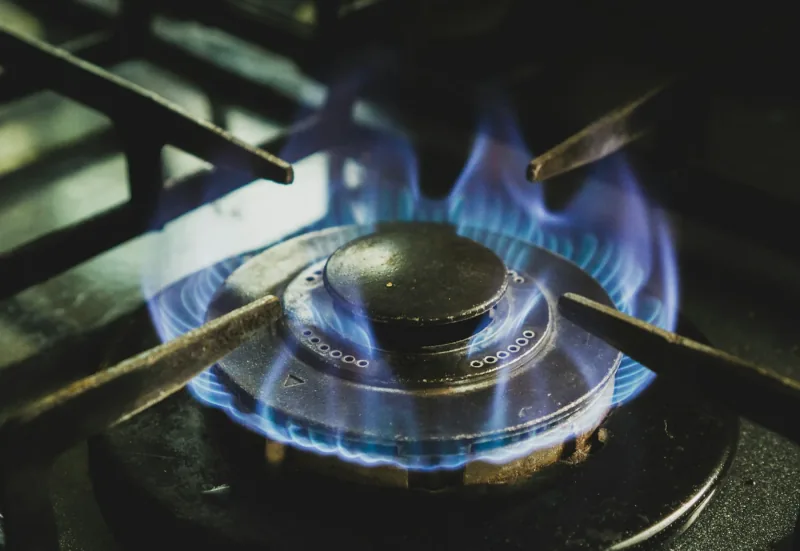
The post-2010 half is where the modern installation standard shows: dedicated circuits, proper appliance taps, and increasingly gas cooking on the larger houses because Piedmont Natural Gas serves the area. It is also where induction hobs turn up more than anywhere else in the service area, and the fault we find on those is almost never the coil. It is a blocked filtered air intake or a tired cooling fan making the inverter shut down part way through cooking, which reads as an unreliable appliance and is a cleaning job.